
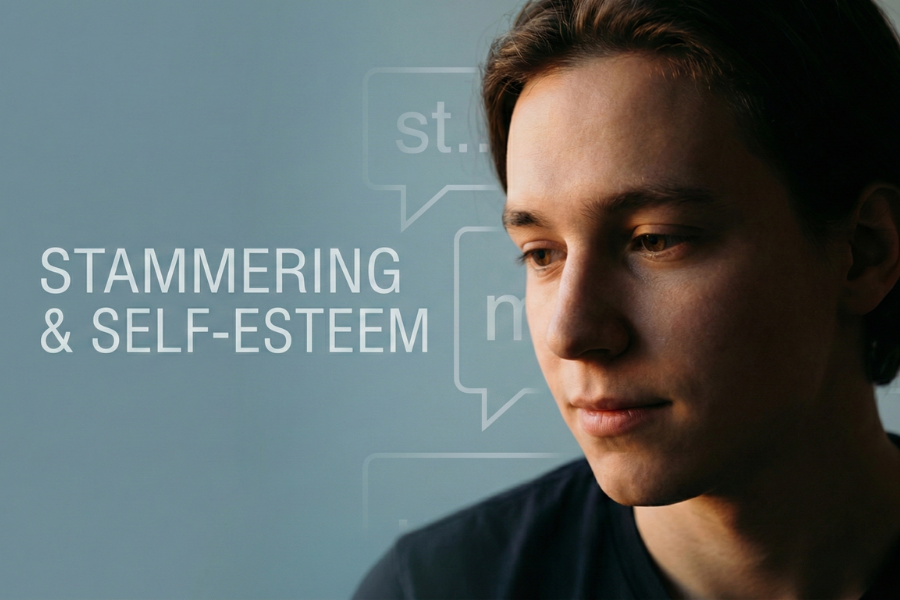
Stammering didn’t just affect my speech, it affected the way I existed. There was a time when it quietly controlled everything: how I behaved, how I felt, and most painfully, how I saw myself. People only heard the pauses in my sentences. They never heard the pauses in my confidence, my self-worth, or my sense of identity There were days when I felt like my own voice was betraying me. I opened my mouth hoping for words but instead got stuck sounds, broken syllables, and long, humiliating silences. And each time that happened, a small part of me shrank. I didn’t just think, “I stammer.” I thought, “Something is wrong with me.” It was a dark kind of self blame, the kind that sits with you at night, reminding you of every moment you wished you could disappear. Every stuck word felt like proof that I was flawed, defective,“less than.” I started hating my own voice. I stopped listening and recording my voice. It felt like an escape from feeling the pain. Whenever I spoke, the only emotion that arose was guilt and embarrassment. I started to feel embarrassed of my own speech, I used to have thoughts like even a small kid can speak fluently, why can’t I ? So in order to avoid feeling emotions, I decided to be silent. It felt like silence was a safe place for me where no one could say anything. As much as I stayed silent outside, the more louder it got inside. It was heavy almost suffocating. It wasn’t peace, it was fear wearing a mask. It was so much that I couldn’t breathe, I started having difficulties in breathing. I started having troubles in sleeping. I stopped talking to everyone, even my family. It felt like the whole world became too heavy. What really shattered me weren’t the stammers, it was the responses to them. The impatience. The mocking. The “just calm down.” The “why can’t you speak properly?” The laughter people tried to hide but never fully did. And worst of all, the pity. Those moments left scars. Not visible ones, but deep emotional ones that made me question everything I was good at. It became so intense that my whole body used to shake whenever I had to speak. I stopped seeing myself through my own eyes. I started seeing myself through their reactions. Small. Awkward. Inadequate. Different. Their impatience became my insecurity. Their jokes became my inner voice. Their misunderstandings became my identity. There were days I didn’t want to talk at all. Stammering didn’t just destroy my speech, it destroyed me in ways I can’t even explain. I was so filled with fear that I couldn’t even go to a new place without feeling anxious. My confidence was so shattered that I couldn’t even walk with my head straight, I used to walk with my eyes down avoiding to make eye contacts. My self esteem was so low that I couldn’t go anywhere without my family. I needed someone to go with me everywhere. The memories of people laughing, mocking or asking why I spoke like this didn’t fade easily. They haunted me in ways I couldn’t explain. Every time I stammered, I lost trust in myself. Every time someone noticed, I lost a bit more. And every time I stayed silent to avoid pain, I lost a part of my voice, and myself. The worst part wasn’t the stammer itself, it was going through it alone. I didn’t have anyone who understood what it felt like to choke on words you fully know. No one noticed how much it hurt, or how lonely it was to stay silent because speaking felt dangerous. I had no support system, no safe person, no space where my voice felt accepted. That isolation cut deeper than anything else. If there’s one thing I learned, it’s this: Stammering didn’t break me. It just forced me to meet the parts of myself I spent years avoiding. My voice may have been shaky, but my journey wasn’t. It was painful, but it was also real – Thank you for reading 🙂
Growing Up with a Stammer: What People Didn’t See
When most people recall their childhood, they think of school plays, laughter in the classroom, and carefree conversations with friends. For me, those memories were there, but they were accompanied by something else: my stammer. It wasn’t just about speech. It was about the quiet struggles people didn’t notice, the feelings hidden beneath every pause, and the lessons I carried with me every day. Conversations were difficult for me. I often tried to avoid such situations where I had to speak. As a child, I recall the emotions I felt when my teacher would make us stand and read a paragraph from the textbook. I wished desperately for the period to end. I read the same paragraph again and again in my mind, only to mess it up when it was finally my turn. I used to rehearse sentences in my head, but when it was my turn, the words broke apart. The class moved on, but I was left replaying that failure again and again. Stammering wasn’t just about words getting stuck. It was about the small, invisible battles no one else noticed. I chose silence in groups because it felt easier than fighting through my own speech. From the outside, it probably looked like I was shy, quite, or maybe even uninterested. But inside, I had so much to say, I just didn’t always have the voice to say it. What people didn’t see was the frustration, the embarrassment, and sometimes the loneliness. Stammering often made me feel like I was standing outside of conversations, watching everyone else speak so effortlessly. I wondered why something so simple for others felt like climbing a mountain for me. It felt unfair. I used to look at people and wonder, “Why me?”. Whenever I used to speak, it made me feel disgusted and embarrassed. I remember I used to have thoughts after I spoke, like it’s better to shut up. My stammer made me hate myself. Looking back, I realize stammering shaped me in ways I didn’t understand at the time. I learned how to listen deeply, how to empathize with others’ struggles, and how much courage it takes to keep speaking even when your voice doesn’t cooperate. It taught me patience because I had to wait for my words, and sometimes wait for others to understand me. It taught me resilience because every time I spoke, I was facing a fear head-on. I started to recognize and be more sensitive to the hidden struggles of others, because I knew what it felt like to struggle silently. Stammering felt like a pause button I never pressed. It interrupted me, it tests me, but it also taught me life lessons that shaped me. My stammer was a challenge, yes but it was also a teacher. Even in the most frustrating moments, it reminded me that my voice mattered, even if it didn’t always sound smooth. Stammering doesn’t just affect speech; it affects confidence, friendships, and identity. It destroys you from the inside but also teaches you resilience in quite powerful ways. My words may pause, repeat, or stumble, but they always find their way out. And that’s enough. Thank you for reading~ Iknoor Kaur
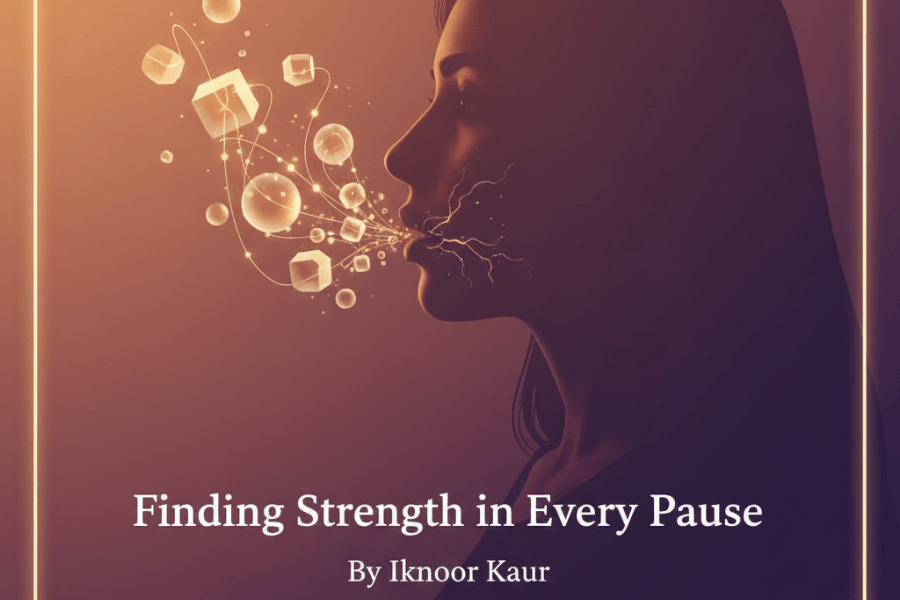
Finding strength in every pause
Finding strength in every pause By Iknoor Kaur Have you ever wanted to say something but felt your words get stuck? Like you couldn’t deliver what you actually wanted to say? Hi, I’m Iknoor Kaur. I’m a psychology student, but more importantly, I’m someone who has lived with stammering for years. My journey with it hasn’t always been easy it has been filled with pauses, repeats, and moments of silence when I wished my words would just flow. For a long time, I kept these experiences to myself, but now I feel ready to share them. That’s why I’ve started this blog. To all those wondering what stammering is, it’s basically a speech disorder where a person has trouble saying some words smoothly. The speech may get stuck, repeat or have long pauses. It’s not because the person doesn’t know what to say, their mind is clear but the words don’t come out easily. One of my earliest memories of stammering was in school, when I stood up to introduce myself. I knew my name, of course, but when I tried to say it, the sound just wouldn’t come out. My heart pounded, and I could feel every pair of eyes on me. It wasn’t just about struggling with speech it was about feeling different, misunderstood, and sometimes even invisible. Over the years, I’ve learned to live with stammering in different ways. Each experience has shaped me, teaching me patience, resilience, and empathy. I am writing this blog not just for myself, but for everyone who has ever felt unheard because of their voice. Millions of people stammer, yet it’s still a topic that’s often misunderstood. Some think it’s just about nerves or something you can “fix” by trying harder. But stammering is much more complex, it’s tied to the way the brain and speech work together, and it often changes with stress, emotion, and environment. Through this blog I want to: Break myths around stammering Share my experiences Give comfort and confidence to others who stammer Help non-stammerers understand how to support What to expect here? In the coming days, I’ll be posting personal stories, simple explanations of what stammering really is, and practical tips that have helped me. I’ll also share reflections that capture how stammering feels from the inside. Stammering may pause my words, but it will never silence my voice. This blog is my way of speaking freely one story at a time. If you’ve ever stammered, or know someone who does, I hope these blogs remind you that none of us are alone in this.It might feel like you are alone but I feel you and I hear you Thank you for reading.~ Iknoor Kaur