
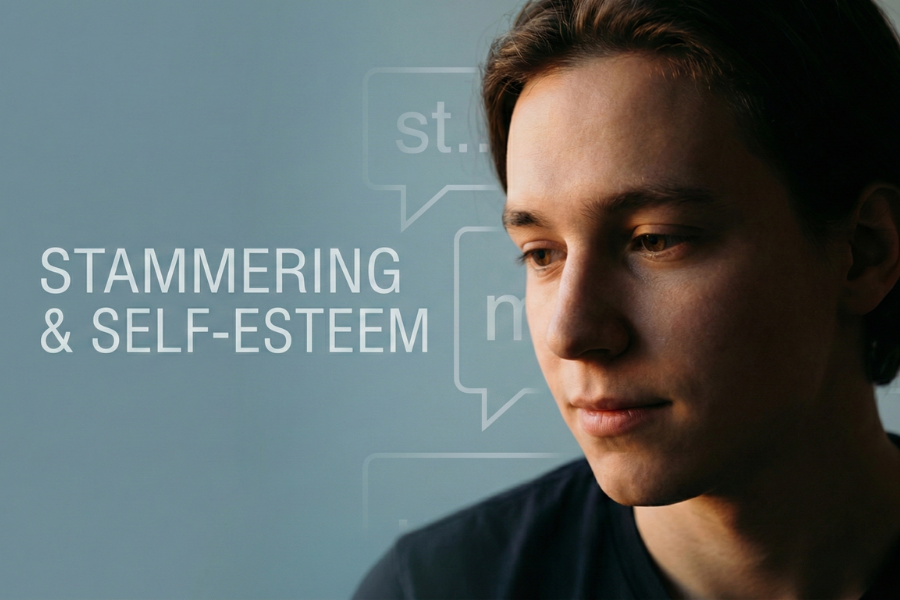
Stammering didn’t just affect my speech, it affected the way I existed. There was a time when it quietly controlled everything: how I behaved, how I felt, and most painfully, how I saw myself. People only heard the pauses in my sentences. They never heard the pauses in my confidence, my self-worth, or my sense of identity There were days when I felt like my own voice was betraying me. I opened my mouth hoping for words but instead got stuck sounds, broken syllables, and long, humiliating silences. And each time that happened, a small part of me shrank. I didn’t just think, “I stammer.” I thought, “Something is wrong with me.” It was a dark kind of self blame, the kind that sits with you at night, reminding you of every moment you wished you could disappear. Every stuck word felt like proof that I was flawed, defective,“less than.” I started hating my own voice. I stopped listening and recording my voice. It felt like an escape from feeling the pain. Whenever I spoke, the only emotion that arose was guilt and embarrassment. I started to feel embarrassed of my own speech, I used to have thoughts like even a small kid can speak fluently, why can’t I ? So in order to avoid feeling emotions, I decided to be silent. It felt like silence was a safe place for me where no one could say anything. As much as I stayed silent outside, the more louder it got inside. It was heavy almost suffocating. It wasn’t peace, it was fear wearing a mask. It was so much that I couldn’t breathe, I started having difficulties in breathing. I started having troubles in sleeping. I stopped talking to everyone, even my family. It felt like the whole world became too heavy. What really shattered me weren’t the stammers, it was the responses to them. The impatience. The mocking. The “just calm down.” The “why can’t you speak properly?” The laughter people tried to hide but never fully did. And worst of all, the pity. Those moments left scars. Not visible ones, but deep emotional ones that made me question everything I was good at. It became so intense that my whole body used to shake whenever I had to speak. I stopped seeing myself through my own eyes. I started seeing myself through their reactions. Small. Awkward. Inadequate. Different. Their impatience became my insecurity. Their jokes became my inner voice. Their misunderstandings became my identity. There were days I didn’t want to talk at all. Stammering didn’t just destroy my speech, it destroyed me in ways I can’t even explain. I was so filled with fear that I couldn’t even go to a new place without feeling anxious. My confidence was so shattered that I couldn’t even walk with my head straight, I used to walk with my eyes down avoiding to make eye contacts. My self esteem was so low that I couldn’t go anywhere without my family. I needed someone to go with me everywhere. The memories of people laughing, mocking or asking why I spoke like this didn’t fade easily. They haunted me in ways I couldn’t explain. Every time I stammered, I lost trust in myself. Every time someone noticed, I lost a bit more. And every time I stayed silent to avoid pain, I lost a part of my voice, and myself. The worst part wasn’t the stammer itself, it was going through it alone. I didn’t have anyone who understood what it felt like to choke on words you fully know. No one noticed how much it hurt, or how lonely it was to stay silent because speaking felt dangerous. I had no support system, no safe person, no space where my voice felt accepted. That isolation cut deeper than anything else. If there’s one thing I learned, it’s this: Stammering didn’t break me. It just forced me to meet the parts of myself I spent years avoiding. My voice may have been shaky, but my journey wasn’t. It was painful, but it was also real – Thank you for reading 🙂